The Art of Negotiation: Are You Being Difficult?
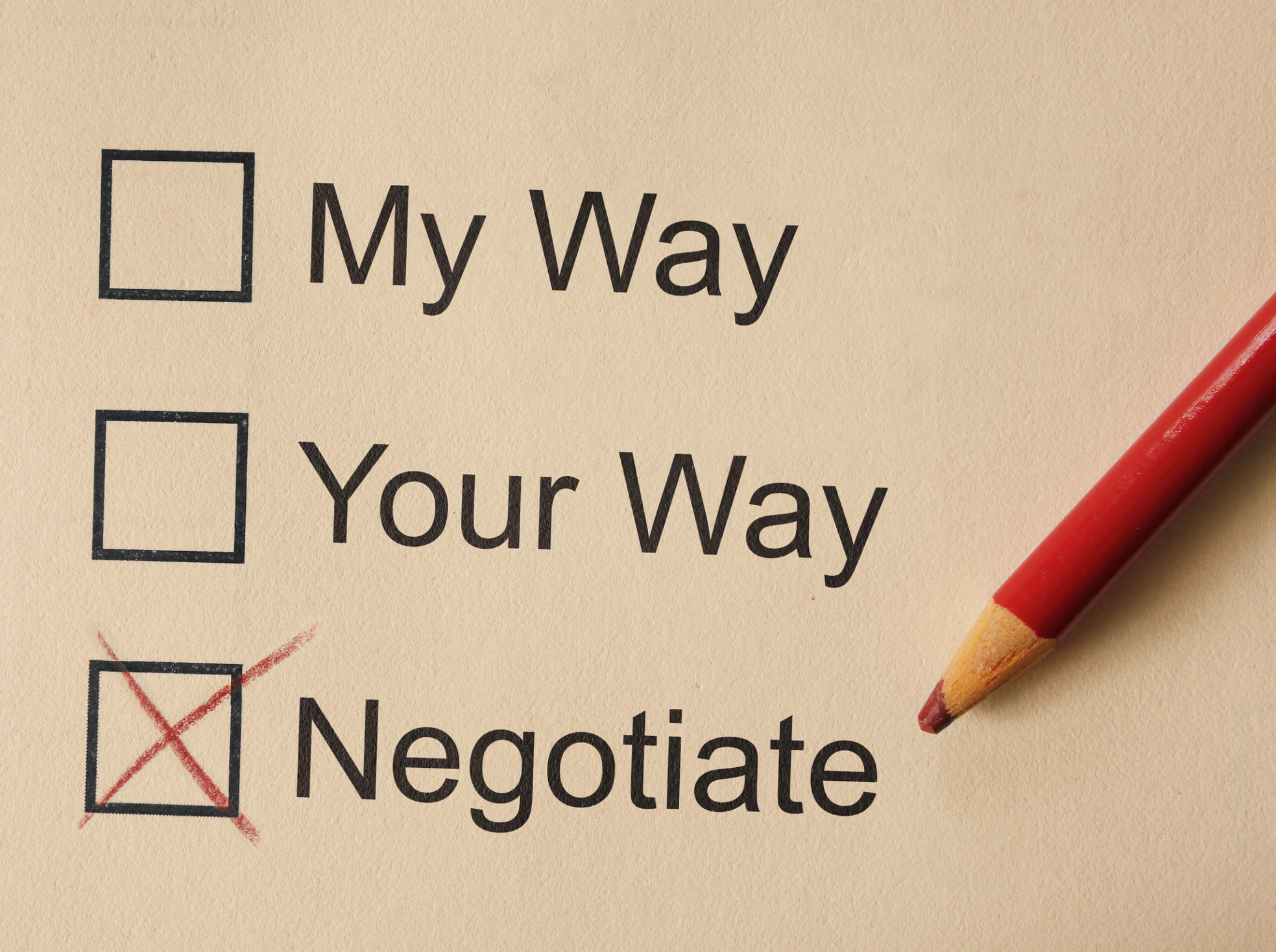
Negotiation isn’t about being difficult. Negotiation is good business.
“But I don’t want to appear difficult.”
“What if they are not willing to budge on their position?”
First things first. BREATHE. And let’s talk the art of negotiation.
It is a misconception that negotiation makes you difficult. It’s not about being difficult. It’s about understanding the other side's position before you start making concessions.
Well, what the heck is a concession?
I’m glad you asked! Simply put, a concession is something of value that you willingly give up or adjust in order to move a negotiation forward. The key however is that it should be intentional and not automatic.
A concession should be exchanged for something.
With a concession, one party makes a movement from its original position. That movement might involve key things such as price, timing, scope, payment terms, responsibilities, deliverables, exclusivity, or another contractual or business term. Let’s imagine that you are a creative consultant who proposes a $4,000 project with a four-week timeline and three rounds of revisions. The prospective client loves your proposal but adds, “Our budget is $3,000.” What do you do at this point?
You have several choices. First, you could simply reduce the fee to $3,000. That is a concession. However, a more strategic negotiator might respond something to the effect of:
“I can work with a $3,000 budget if we reduce the project scope to two rounds of revisions and extend the timeline to five weeks.”
Now, you, as the consultant, made a concession—but you received something in return (Assuming they agree of course). If I give, you give. It’s that simple and is called the Principal of Reciprocity. Of course it doesn’t mean that every concession has to be equal in dollar value. It simply means that the negotiation should involve movement from both sides where possible and when it makes sense.
Your concession should have a purpose.
Don’t just say, “Ok, I can lower the price,” before understanding why the other party is asking for a lower price. Perhaps their budget is actually $3,000. Perhaps they don’t need one of the deliverables and can wait an extra week for final execution. But you don’t know that immediately. That’s why a good negotiator doesn’t immediately concede. Some questions could reveal opportunities that aren’t immediately obvious. Questions such as:
Which part of the proposal is the biggest concern?
Is the issue the overall investment or the scope of the project?
Is there flexibility around the timeline?
What would make this proposal work for you?
If we adjusted the scope, would that address the budget concern?
A concession should ideally create an expectation that the other part will make a corresponding movement.
It’s important to remember that although a term may cost you very little, it might be extremely valuable to the other side, since value is subjective.
Don’t give away your concessions too early.
Do not…I repeat, DO NOT immediately agree to every request, because the other party might be thinking, “Hmmm…what else can I get?” “How far can I take this?” Consider each request individually and determine what it is worth to you. Only then should you decide whether it is something you are willing to exchange.
Ultimately, a concession should move the conversation forward without unnecessarily moving you away from your interests. The strongest negotiators understand what they can afford to give, what they should ask for in return, and when a concession is no longer worth the cost.